When you buy a new car, the excitement is always high. But before you drive out of the showroom, you must make sure every part of the car is in perfect shape. One thing that most buyers overlook is the car battery inspection. Even a new car can sometimes come with a weak or undercharged battery, especially if it was standing in the stockyard for weeks. That’s why doing a new car battery check during delivery is extremely important.
In this blog, we will guide you step-by-step on how to check the
car battery condition before taking delivery. These tips are simple, practical, and will help you avoid future starting problems. If you follow them carefully, you can ensure your new car’s electrical system stays healthy from day one.
Why Car Battery Check Matters During Delivery
A car battery powers all essential components like ignition, lights, infotainment, AC blower, and sensors. If the battery is weak at the time of delivery, you may face issues such as:
- The car is not starting smoothly
- Dashboard warning lights
- Weak headlight brightness
- Battery draining quickly
- Reduced alternator efficiency
Sometimes, batteries lose charge while sitting idle at the dealership. So it’s better to check everything yourself instead of depending completely on the staff.
1. Check the Battery Manufacturing Date
The first step in the
car battery inspection is verifying its manufacturing date. Every battery has a code printed on top or on the sticker.
Why does it matter?
A battery older than 6–8 months may already have lost some charge, or its chemical performance may have dropped. Even in a new car, you should expect a fresh battery.
What to do
- Ask the sales executive to show the battery label
- Look for the month and year code
- Prefer a battery not older than 3–4 months
If the battery is too old, request a replacement before delivery.
2. Visually Inspect Battery Terminals
Your next step should be a simple visual check. Weak connections or corrosion can affect battery performance even in new cars.
Look for
- Clean terminals
- Tight clamps
- No rust or white powder
- No loose wiring
- No cracks on the battery casing
If you see any rust or wetness around terminals, it means the battery wasn’t maintained properly. Ask the staff to clean or replace it if needed.
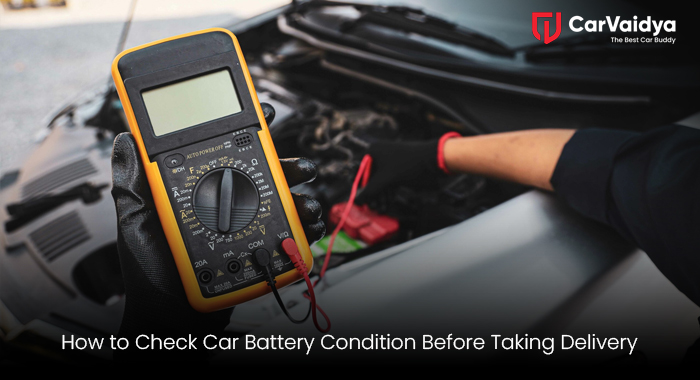
3. Perform a Battery Voltage Test
One of the most important steps in a battery voltage test is checking how much charge the battery currently holds.
The ideal voltage readings are
- 12.4V – 12.7V → Good and healthy battery
- 12.2V – 12.3V → Slightly weak, may need charging
- Below 12.0V → Poor condition, ask for replacement
Most dealerships will have a multimeter or battery tester. Don’t hesitate to ask them to do the test in front of you. If they refuse, you can bring your own small digital multimeter. It’s cheap and very useful.
4. Start the Car and Observe the Response
A
healthy car battery cranks the engine quickly. When you turn the key or press the start button, the car should start in one go without any slow cranking.
Check for
- Smooth startup
- No clicking sound
- No delay in ignition
If the engine feels slow or struggles to start, the battery may be undercharged.
5. Turn On Electrical Features to Test Load
Switch on
- Headlights
- Cabin lights
- Infotainment
- AC blower
- Wipers
When you turn on these features together, the headlight brightness should not dip suddenly. If it does, the battery may not be delivering proper power.
6. Check for Any Battery Warning Signs on Dashboard
Most new cars come with advanced warning systems. After starting the vehicle, confirm that there is no battery symbol glowing on the dashboard.
If the warning stays on, it indicates:
- Low battery charge
- Alternator not charging
- Sensor fault
Do not take delivery until the issue is fixed.
7. Ask for Battery Warranty Card and Details
Every new car battery comes with a manufacturer's warranty, usually 36–55 months, depending on the brand.
Before leaving the showroom, make sure you get:
- Original warranty card
- Warranty start date
- Battery serial number
- Dealer stamp
Keep this document safe for future replacements.
8. Take a Short Test Drive
A short drive of 1–2 km can also reveal the battery condition. During the drive, pay attention to:
- Headlight stability
- Infotainment display brightness
- Idle RPM stability
- AC compressor load
If the lights flicker or the display dims when you rev the engine, the battery may not be performing properly.
9. Use a Professional to Inspect the Battery (Optional but Best)
If you want a complete and expert-level inspection, you can use a professional service like CarVaidya. Their trained technicians perform detailed battery checks, voltage testing, and complete delivery inspection to ensure your car is in perfect shape. This gives peace of mind, especially for first-time car buyers.
A new car should give you a trouble-free experience from the first day. By doing a proper new car battery check and following all the steps mentioned above, you can avoid unnecessary breakdowns and ensure long battery life. Battery issues are very common in cars standing for months at dealerships, so being careful is always better.
You can read some other articles
How to Inspect Dashboard and Controls Before Taking Car Delivery
How to Check Car Lights and Indicators Before Delivery
How to Adjust Car Mirrors for Safe Driving: Complete Guide to Side and Rearview Mirror Adjustment
 By CarVaidya





0 Comments