Buying a new car is always an exciting moment — that fresh smell, shiny paint, and the feeling of owning something brand new. But before you take your car home, it’s super important to perform a complete pre-delivery inspection (PDI). One of the most overlooked yet crucial steps in this process is checking the car lights and indicators. A simple light or indicator issue can lead to visibility problems, safety risks, or even traffic fines later. So, before you drive off the dealership, take a few minutes to ensure everything in your car lighting system is working perfectly.
In this guide, we’ll walk you through how to check car lights and indicators before delivery, step-by-step. Whether it’s a headlight inspection or an indicator light check, we’ll make sure you know exactly what to look for.
1. Start with the Headlights
Your car’s headlights are your eyes on the road, especially at night. Before delivery, turn on the headlights and make sure both the low beam and the high beam are working properly.
Check brightness – Both sides should have equal brightness; one dim light means a weak bulb or faulty connection.
Inspect alignment – The beams should point straight and slightly downward. Misaligned headlights can blind oncoming traffic or reduce road visibility.
Test automatic headlights – If your car has an auto-light function, make sure it turns on and off automatically when you cover or uncover the light sensor.
A proper headlight inspection ensures safety and avoids costly replacements later. Ask the dealership technician to adjust the headlight focus if you notice any imbalance.
2. Check Parking and DRL Lights
Daytime Running Lights (DRLs) are not just for looks; they improve visibility even during daylight. Make sure both DRLs and parking lights glow evenly on both sides.
Turn on the parking light switch and walk around the car to check front and rear lights.
See if the DRL lights are functioning automatically when you start the engine.
Check that all the bulbs are free from flickering or discoloration.
If you notice any light flickering, request a replacement before signing the delivery form.
3. Test the Indicator Lights
Next, perform a car indicator check. Turn on the right and left indicators one by one.
Both front and rear indicators should flash in sync.
Make sure the dashboard indicator symbols blink along with the outside lights.
Check the hazard lights (all indicators flashing together) for proper functioning.
Sometimes, new cars have loose connections due to transport vibrations. A quick check ensures you don’t end up with a dead indicator during your first highway drive.
4. Don’t Forget Tail Lights and Brake Lights
Your car lighting system check is incomplete without tail and brake lights. These lights are essential for vehicles behind you to understand your movements.
Ask a friend or salesperson to stand behind the car while you press the brake pedal.
Both brake lights and the center high-mount stop lamp (CHMSL) should light up instantly.
Also, check that the tail lights turn on when you switch on the headlights or parking lights.
If one side is dimmer than the other, it’s usually a sign of a weak bulb or socket issue. Make sure the dealership fixes it right away.
5. Inspect Reverse and Number Plate Lights
When you put the car in reverse, the reverse lights should glow white immediately. These lights help you see obstacles and alert others that you’re reversing.
Also, check the number plate lights — they’re often ignored but mandatory by law. Both lamps should illuminate your registration plate evenly.
A dark number plate might seem like a small issue, but it can attract unnecessary traffic fines.
6. Test Fog Lamps and Cornering Lights
Many modern cars come with fog lamps and cornering lights. Test both functions carefully:
Switch on the front and rear fog lamps to confirm brightness.
Check if the cornering lamps activate automatically when you turn the steering wheel or use the indicators.
Ensure the fog lights turn off when switching to high beam, as required in some vehicles.
These additional lights play a crucial role in improving visibility in poor weather conditions, so never skip checking them during your car delivery.
7. Dashboard Light Indicators
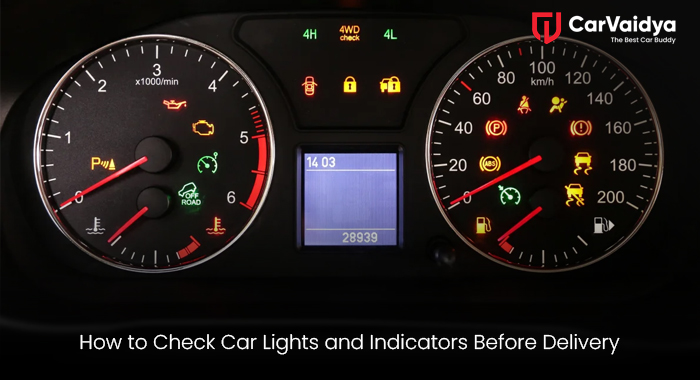
While performing the car lighting system check, also keep an eye on the dashboard. All indicator symbols — headlights, fog lamps, handbrake, seatbelt warning, etc. — should light up briefly when you start the ignition.
If any light doesn’t appear or stays on constantly, ask the service advisor to diagnose it before you drive away.
8. Final Tips Before You Sign the Delivery Paper
Before accepting your car, do a quick walkaround again at dusk or in a slightly dark area. It helps spot even minor lighting issues that may not be visible in bright daylight.
Here’s a small checklist to remember
- Headlights: Are the low and high beams working?
- Indicators: Flashing on both sides?
- Brake & tail lights: Bright and balanced?
- Fog lamps & DRLs: Fully functional?
- Number plate & reverse lights: Clear illumination?
If everything looks fine, you’re good to go!
9. Why Lighting Checks Matter
You might think, “It’s a new car, everything should work fine!” But even new cars can have minor faults due to manufacturing errors or transport damage. A quick headlight inspection or car indicator check ensures safety and saves time later. A single faulty bulb can make night driving risky or cause your car to fail an inspection. So, taking 10 extra minutes before delivery is always worth it.
10. Need Expert Help?
If you’re not confident about checking everything yourself, you can always get professional help. Platforms like CarVaidya offer expert car inspection and maintenance services to make sure your car’s lighting system, brakes, and electricals are all perfect before or after delivery.
A car lighting system check is one of the simplest yet most important parts of your car’s pre-delivery inspection. From headlight inspection to car indicator check, every detail matters for your safety and visibility on the road.
So next time you’re at the dealership, don’t rush the delivery. Take your time, test every light, and ensure your car is truly ready to shine — safely and confidently.
You can read some other articles
 By CarVaidya





0 Comments