Buying a new car is always exciting, but that excitement shouldn’t stop you from doing a proper inspection before taking delivery. Most buyers check the exterior, paint, features, and basic documents, but they often skip two of the most important areas — car underbody
inspection and car suspension check. These hidden parts decide how safe and smooth your new car will run. If you're preparing your new car delivery checklist, this guide will help you understand what to look for under the car, how to identify early faults, and why these small steps can save you from big repair bills later.
Why Underbody and Suspension Checks Matter Before Delivery
Even brand-new cars can arrive with minor transport damage, loose suspension parts, or scrapes caused while unloading from carriers. These issues usually stay unnoticed until your car develops noise, alignment issues, or bumpy rides.
By doing a proper car underbody inspection before delivery, you make sure:
- There is no damage to the chassis
- Suspension parts are fitted properly
- No parts are leaking or rusted
- You don’t face early repairs or warranty arguments later
A few minutes of inspection can save months of unnecessary workshop visits.
1. Start With a Proper New Car Delivery Checklist
Before checking the underbody, ensure the dealership has parked your car in good light and on a flat surface. A good new car delivery checklist always includes:
- VIN and engine number matching
- Tyre Manufacturing Week
- Paint and panel inspection
- Electrical features testing
- Underbody and suspension check (most important but most ignored)
If the dealer tries to rush the delivery, politely insist that you will not skip the underbody inspection.
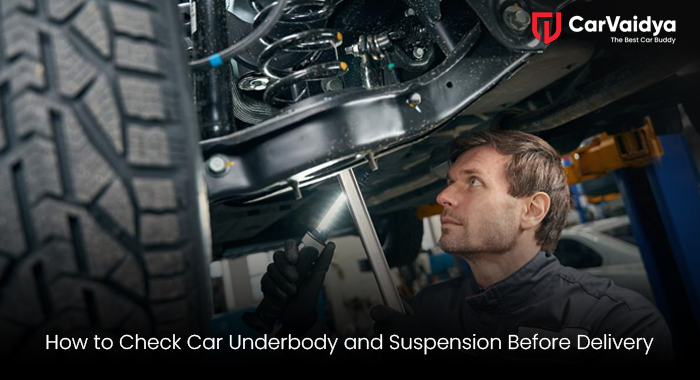
2. How to Perform a Car Underbody Inspection
The underbody is not something we see every day, so it feels complicated. But it’s actually simple when you know what to look for.
Look for scratches or dents
Check the metal floor area, fuel tank, exhaust pipe, and protective plates. Small scratches are normal due to transportation, but dents or deep scrapes are red flags. These can affect structural strength.
Check the exhaust system
A brand-new car should have a clean and firm exhaust pipe. Make sure it’s mounted properly and not hanging or touching any surface. A loose exhaust can create a rattling noise later.
Inspect for oil or fluid leakage
- Engine oil drops
- Coolant leaks
- Brake fluid traces
- Grease marks near joints
Even a small leakage in a new car is unacceptable. It usually means a loose bolt, seal issue, or poor PDI.
Check the protective underbody coating
Ask the dealer if the car has a factory underbody coating. If it’s patchy or damaged, request a re-coating. It protects against rust, especially in coastal or rainy areas.
3. How to Do a Car Suspension Check Before Delivery
Suspension problems in new cars are not very common, but they do happen. And the worst part is — once you accept the car, it becomes hard to prove whether the issue existed at delivery or came later.
Here’s how to perform a quick and effective car suspension check:
Bounce Test
Gently push down the bonnet and rear of the car and release. The car should go down and come back to position smoothly without multiple bounces. Excessive bounce means suspension damping issues.
Inspect suspension components visually
- Look at:
- Shock absorbers
- Springs
- Lower arms
- Link rods
- Bushes
There shouldn’t be any rust, cracks, bent parts, or loose joints.
Check wheel alignment visually
Stand in front of the car and look at both wheels. They should appear straight, not tilted inward or outward. If they look uneven, ask for alignment correction before delivery. Listen for noise during slow movement. The salesperson moves the car slowly while you listen from outside. Any clunking sound, tik-tik noise, or rubbing sound indicates a fitting or suspension issue.
4. Take a Short Pre-Delivery Test Drive
Many dealerships try to avoid test drives on brand-new cars, but you should still request a short 300–500 meter drive. This helps you identify:
- Steering pulling left or right
- Suspension noise on bumps
- Brake vibration
- Uneven ride feel
If anything feels off, don’t ignore it. Ask the team to fix it immediately.
5. Why Professional Underbody Inspection Is Better
Most buyers don’t know what exactly to look for under the car, and dealerships sometimes rush the process. That’s where third-party experts can help. Services like
CarVaidya offer professional pre-delivery inspection (PDI), where trained technicians check your car’s underbody, suspension, electrical systems, paint, documents, and everything else with proper tools. This ensures your car is 100% defect-free before you take it home.
A new car is a big investment, and you deserve a perfect vehicle from day one. By adding car underbody inspection and car suspension check to your new car delivery checklist, you protect yourself from hidden issues that show up later. Take your time during delivery, inspect the car properly, and don’t let anyone rush you.
Your peace of mind begins the moment your new car leaves the showroom — make sure it leaves in perfect condition.
 By CarVaidya





0 Comments