When buying a used car or doing professional car detailing, one of the smartest things you can do is check the car’s paint condition. Why? Because the paint tells a story—about accidents, repairs, and even the quality of maintenance. And to decode that story, you need a paint thickness meter (also called a paint thickness gauge or car paint meter).In this complete guide, we’ll explain what this tool does, how to use it step-by-step, and how it helps you detect repainted areas or poor paint jobs like a pro.
What Is a Paint Thickness Meter?
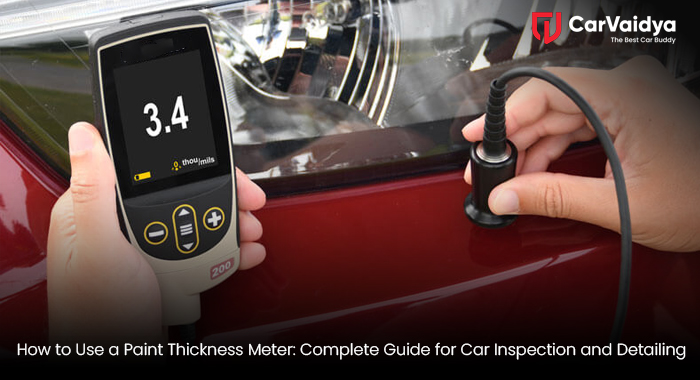
A paint thickness meter is a
car paint inspection tool used to measure the thickness of paint and coatings on a car’s metal or plastic body. It tells you how many microns (µm) thick the paint layer is on a particular panel.
Professionals and car detailers use this digital paint thickness meter to evaluate automotive paint thickness and check if any panel has been repainted or repaired.
Usually, a new car has a paint thickness of 80 to 180 microns, depending on the brand and paint type. Any major difference—say, one panel showing 120 microns while another reads 300 microns—means the thicker one is probably repainted or has body filler underneath.
Why You Should Use a Paint Meter Before Buying or Detailing a Car
Using a car paint checking tool is super helpful, whether you’re buying a used car or detailing one for a client.
Here’s why
- Detect Repainted Areas: The paint meter for car inspection can easily identify areas that have been resprayed or repainted after an accident.
- Check Car Paint Originality: It helps you confirm whether the paint is original from the factory or done later.
- Avoid Hidden Damages: Many sellers polish and repaint damaged areas. With this car paint inspection tool, you can spot those repairs in seconds.
- Plan Detailing Work: Detailers can use it to measure coating thickness before doing polishing or paint correction.
- Assess Paint Quality: It helps in a car paint quality check, ensuring even thickness and no overspray.
How to Use a Paint Thickness Meter – Step-by-Step Guide
Let’s now get into the practical part — how to use a paint meter correctly.
Step 1: Clean the Car Surface
- Before taking any readings, clean the car’s surface. Dirt or wax can interfere with accurate readings. Use a microfiber cloth and mild cleaner.
Step 2: Turn On the Paint Meter
- Power on the device. Most digital paint thickness meters have an easy interface with buttons for calibration and measurement.
Step 3: Calibrate the Device
- Many meters come with calibration foils or metal bases. Place the meter on the base and follow the manual to zero it out. This ensures accuracy for your readings.
Step 4: Take Readings Panel by Panel
- Start measuring from the roof, then move to the hood, fenders, doors, and trunk. Press the probe gently on each panel and wait for the reading.
- Record every result — this helps you compare easily later.
Step 5: Compare Readings
Now, look for differences.
- If most panels show similar numbers (say, 120–140 µm), the paint is likely original.
- If one panel shows 300+ µm or more, that part was repainted or had filler work.
- Extremely low readings (below 70 µm) may mean the paint has been over-polished or thinned.
Step 6: Recheck Suspicious Areas
- If any reading feels off, take multiple measurements on that panel to confirm consistency. Sometimes, small variations are normal, but large ones mean repairs.
How to Measure Car Paint Thickness Accurately
For the most reliable car body paint measurement, follow these pro tips:
- Take at least 3 readings per panel.
- Avoid measuring on hot surfaces or in direct sunlight.
- Keep the sensor flat against the body.
- Don’t measure near badges, edges, or curves.
The paint coating thickness gauge works best on steel and aluminum panels. Some advanced models can also measure on plastic bumpers using magnetic or ultrasonic sensors.
How a Paint Thickness Meter Helps in Car Detailing
When doing car detailing, especially paint correction or polishing, it’s crucial to know how much clear coat is available. A paint thickness gauge helps detailers determine how aggressively they can machine polish without damaging the paint layer. Professional detailers use automotive paint thickness readings to ensure even results and preserve the clear coat. This is where tools like the car paint meter become a must-have in every car detailing tool kit.
How to Detect a Repainted or Accident-Repaired Car
If you’re buying a used car, a paint meter for car inspection is your best friend. Here’s what to look for:
- High Readings (Above 250 µm): Indicates repaint or filler.
- Uneven Readings: Suggest different paint layers or touch-ups.
- Zero or Low Readings: May point to rust or over-sanded surfaces.
A paint thickness meter is one of the smartest and most reliable
used car inspection tools you can own. Whether you’re a car buyer, a detailer, or an enthusiast, it gives you insights that the naked eye can’t.Knowing how to measure car paint thickness helps you check car paint originality, spot hidden bodywork, and make informed decisions before spending money. Suppose you’re unsure or don’t have the tools. In that case, you can always rely on
professional inspection services like CarVaidya, where experts
use advanced car paint checking tools and digital meters to evaluate your car’s real paint condition and value.
Use this paint meter guide to make your next car purchase or detailing job 100% transparent, safe, and professional.
 By CarVaidya





0 Comments