In India, businesses and corporations often invest in bulk
car purchases to expand their fleets, reward employees, or support operations.
Whether it’s for sales teams, logistics, or rental purposes, buying multiple
vehicles at once can save costs and time. However, this also increases the risk
of delivery issues and quality discrepancies. That’s why a thorough Pre-Delivery
Inspection (PDI) for corporate and fleet cars is not just important—it’s
essential.
What is PDI for Corporate and Fleet Cars?
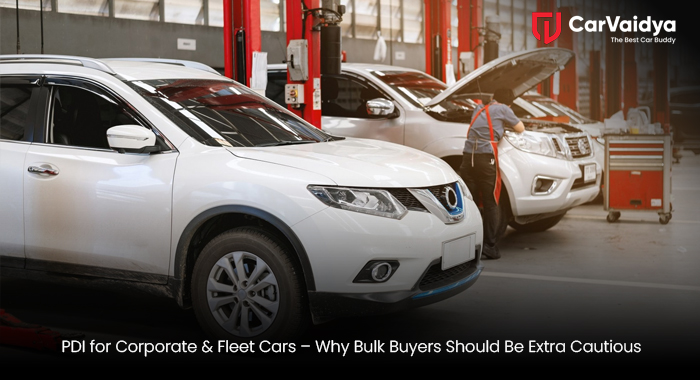
Pre-Delivery Inspection (PDI) is a crucial step conducted
before the vehicle is handed over to the buyer. It ensures that every car
delivered is in perfect condition, as promised by the dealer or manufacturer.
For corporate car inspection before delivery or fleet vehicle inspection before
delivery, this process becomes more complex due to the number of cars involved.
Bulk buyers—especially companies purchasing vehicles for
staff or fleet operations—must be extra cautious. A small oversight in one
vehicle could multiply across dozens, leading to operational setbacks, safety
issues, and financial loss.
Why Corporate Buyers Need PDI
Corporate car buyers often assume that vehicles come brand
new and defect-free from the factory. But in reality, even new cars can have
issues like:
- Scratches and dents during transportation
- Missing accessories or documentation
- Software glitches in infotainment systems
- Improper tire pressure or fluid levels
- Alignment or engine calibration problems
For a business purchasing 10, 20, or even 100 vehicles,
skipping a bulk car delivery inspection can mean receiving a fleet riddled with
hidden defects. This can affect productivity, increase maintenance costs, and
hurt the company’s image.
PDI for Fleet Cars – What to Check
A fleet car checklist in India must include thorough physical,
mechanical, and documentation checks for every vehicle. Here’s a breakdown of
what to inspect:
1. Exterior Inspection
- Scratches, dents, or paint inconsistencies
- Windshield cracks or chips
- Proper alignment of body panels
- Functionality of all exterior lights
2. Interior Check
- Seat quality and stitching
- Functioning of infotainment and A/C
- Door locks, window switches, and wipers
- Clean interiors with no foul odors
3. Mechanical Checks
- Battery condition and charge
- Fluid levels – oil, coolant, washer
- Engine start and idle behavior
- Brake responsiveness
- Tire quality and correct pressure
4. Documentation
- Invoice and registration papers
- Insurance documents
- Owner’s manual and service booklet
- Duplicate keys and accessories
You can also request a corporate vehicle PDI checklist PDF
from the dealership or prepare your own to ensure consistency across
inspections.
Common PDI Issues in Bulk Car Orders
When inspecting bulk car purchases, some frequent problems
found during PDI include:
- Inconsistent equipment levels across cars
- Missing OEM accessories (floor mats, toolkit, etc.)
- Minor transportation damage (often unnoticed)
- Faulty electronics or sensor errors
- Registration discrepancies for commercial use
Since vehicles may be dispatched from different stockyards
or plants, variations are common. This makes PDI for business car purchase an
absolute necessity.
How to Inspect Corporate Cars Before Delivery
Assign a Dedicated Inspection Team
Train your fleet management or admin staff in basic vehicle inspection
techniques. For large orders, consider hiring a third-party PDI expert.
Use a Standardized Checklist
A universal car delivery checklist for fleet buyers ensures that every car is
checked uniformly. This reduces the chance of overlooking common issues.
Stagger Delivery
Instead of receiving 50 cars at once, stagger deliveries in batches of 5 or 10.
This gives your team time to inspect each batch properly.
Document Every Finding
Use photos, video, and written notes to record any defects. This makes it
easier to raise disputes with the dealer later.
Seek Written Confirmation for Fixes
If issues are found, ensure the dealer acknowledges them in writing and
confirms the timeline for resolution or replacement.
Managing PDI for Multiple Vehicles
How to manage car PDI for multiple vehicles depends on the
size of the order and internal resources. For example:
- Small fleet purchase (5–10 cars): You can manage this
internally with a detailed checklist and a few trained employees.
- Medium to large fleet (20+ cars): Hire third-party fleet
inspection agencies. Some dealers offer corporate PDI services at no extra
charge.
- PAN India delivery: Coordinate with local branches or
service points for distributed inspections.
Car Inspection Tips for Fleet Management
Always inspect cars in daylight for better visibility.
- Check VINs to match them with invoices.
- Start and run the engine for at least 5–10 minutes.
- Test drive a few random units from the batch.
- Keep a master spreadsheet of all issues and resolutions.
Bulk Car Delivery Issues in India
In India, bulk car delivery issues often go unnoticed until
the cars are deployed. Common challenges include:
- Dealer rushing delivery due to targets
- Lack of coordination between the dealer and the RTO
- Delays in paperwork, especially for commercial registration
- Variations in features, colors, or trims from what's ordered
Being proactive with a vehicle inspection for corporate
buyers helps in reducing these risks.
A Pre-Delivery Inspection (PDI) for corporate and fleet cars
is not just a formality—it’s a critical process that protects businesses from
future losses. Whether you’re buying 5 or 50 vehicles, a robust inspection
strategy ensures you get what you paid for. From checking mechanical integrity
to verifying documentation, every step in the PDI process for business car
purchases contributes to a successful and hassle-free fleet deployment.
Businesses should adopt a professional approach to PDI using
a corporate vehicle PDI checklist PDF, train staff, and even consider third-party
audits when dealing with large orders. After all, in fleet management,
prevention is far more cost-effective than repairs.
You Can Read Some Other Articles
NHAI’s
one vehicle one FasTag program updates your KYC by January
The
Importance and Functioning of ABS and EDS Safety Features in a Car
Understanding
the Significance of Drive Belts in Automobiles
 By CarVaidya





0 Comments